DIY demolition can look simple from the outside. You grab a sledgehammer, clear a room, tear out a wall, and haul the debris away. For many homeowners, it feels like an easy way to save money before a remodel, renovation, or cleanout. But the truth is that DIY demolition can become dangerous fast when you do not know what is behind the walls, under the floors, or above the ceiling.
The biggest risk is not always the part you can see. It is the hidden wiring, old plumbing, load-bearing framing, hazardous materials, unstable debris, and permit issues that can turn a weekend project into a costly emergency. Before you start a DIY house demolition project, it is important to understand what can go wrong and when it is safer to call a professional demolition team.
Why DIY Demolition Is More Dangerous Than It Looks
DIY demolition is risky because every structure has hidden systems and unknown conditions. A wall may look like drywall and studs, but it could contain electrical wiring, plumbing lines, gas lines, ductwork, insulation, or structural supports. Once you start tearing into it, those hidden elements become immediate hazards.
Professional demolition crews do not simply start breaking things apart. They assess the structure, identify risks, plan the removal process, protect surrounding areas, and coordinate debris hauling. That planning matters because demolition changes the stability of a space as work progresses. Removing the wrong section first can cause materials to shift, collapse, or fall unexpectedly.
Many homeowners also underestimate the physical danger of the work itself. Demolition creates sharp debris, airborne dust, heavy materials, exposed nails, broken glass, and uneven walking surfaces. Even small projects can lead to cuts, falls, back injuries, eye injuries, or respiratory problems when the work is not handled properly.
A successful demolition is not just about removing material. It is about removing it in the right order, with the right tools, and with a clear plan for safety and disposal.
Your DIY Demolition May Hide Structural Risks
A DIY demolition house project becomes especially dangerous when structural components are involved. Load-bearing walls, beams, joists, rafters, and support columns are not always easy to identify without experience. Removing or damaging one of these elements can affect the stability of the entire home.
For example, a homeowner may think they are opening up a room by removing a wall between a kitchen and living area. If that wall supports weight from the floor above, roof system, or attic framing, taking it out without temporary support can cause sagging, cracking, or partial collapse. The damage may not appear immediately, but it can create long-term structural problems.
Floors can also become unsafe during demolition. Removing tile, subflooring, or old fixtures may reveal rot, termite damage, water damage, or weakened framing. Once debris piles up, the added weight can put more pressure on already compromised areas.
This is one of the biggest reasons professional demolition teams inspect the site before work begins. They look for signs of structural weakness, identify what can be removed safely, and determine whether temporary bracing or a more controlled removal method is needed.
Electrical and Utility Hazards You Can Expose Yourself To
DIY house demolition can expose dangerous utilities that should never be handled casually. Electrical wiring is one of the most common risks. Cutting into a wall without knowing where wires are located can lead to shock, fire, damaged circuits, or power outages in other parts of the home.
Plumbing lines are another concern. A hidden water line behind a wall or under flooring can burst during demolition and cause flooding, mold, and expensive repairs. Older homes may also have pipes in unexpected places due to previous remodels or additions.
Gas lines create an even more serious risk. Accidentally damaging a gas line can lead to leaks, fire, or explosion. This is why utilities should be identified, shut off, capped, or disconnected by qualified professionals before certain types of demolition begin.
The same applies to HVAC systems, sewer lines, oil tanks, and underground utilities during exterior demolition. What looks like a simple home demolition project can quickly involve multiple trades, permits, inspections, and safety steps before removal can begin.
Hazardous Materials Are a Major Hidden Danger
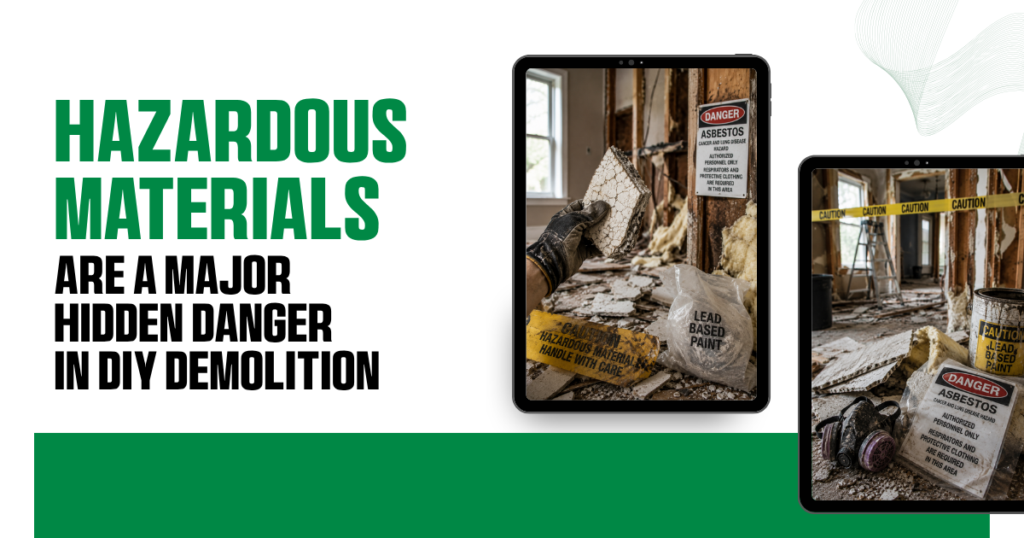
One of the most overlooked risks in DIY demolition is exposure to hazardous materials. Older homes may contain asbestos, lead-based paint, mold, silica dust, treated wood, or other materials that require special handling. These hazards are not always visible, and disturbing them can release harmful particles into the air.
Asbestos is a major concern in demolition and renovation work. It was commonly used in insulation, floor tiles, roofing materials, siding, adhesives, pipe wrap, and textured surfaces in many older buildings. When asbestos-containing materials are broken, cut, scraped, or removed incorrectly, fibers can become airborne and create serious health risks.
Lead-based paint is another common issue in older homes. Sanding, scraping, breaking, or tearing out painted surfaces can create lead dust. This dust can settle on floors, clothing, tools, and nearby rooms, creating exposure risks for children, pets, and adults.
Mold is also common in spaces with water damage, basements, bathrooms, kitchens, and behind old drywall. Tearing out mold-contaminated materials without containment can spread spores throughout the home.
This is where DIY demolition often becomes more expensive than expected. Once hazardous materials are disturbed, cleanup may require specialized testing, containment, removal, and disposal. Calling professionals before demolition begins can help prevent exposure and avoid costly mistakes.
Home Demolition Creates More Debris Than Most People Expect
Home demolition produces a large amount of debris, often much more than a homeowner expects. Drywall, plaster, cabinets, flooring, roofing, tile, framing lumber, fixtures, concrete, and insulation add up quickly. Even a single-room demolition can fill a dumpster faster than planned.
The challenge is not just volume. Different materials may need to be separated, handled, or disposed of according to local rules. Construction and demolition debris is heavy, bulky, and difficult to move without the right equipment. Overloading a dumpster or placing restricted materials inside it can lead to added fees, delays, or rejected loads.
Weight is another issue. Concrete, brick, tile, dirt, and roofing shingles can become extremely heavy in a short amount of space. A dumpster that looks half full may already be near its weight limit. This is especially important for roofing, masonry, bathroom demolition, and garage cleanouts.
Professional hauling support helps keep the job moving. The right dumpster size, proper placement, and scheduled pickup can prevent debris from blocking driveways, sidewalks, work areas, or access points. For contractors and homeowners, reliable debris removal is a major part of keeping demolition safe and efficient.
Your DIY Demolition Project Might Violate Permit and Code Requirements
DIY demolition can create permit problems if you begin work without checking local requirements. Many towns require permits for structural demolition, major interior demolition, full home demolition, garage removal, deck removal, and certain renovation projects. In New Jersey, demolition permits may be issued for residential and nonresidential structures, and local building departments can have specific requirements.
Permits are not just paperwork. They help confirm that the project follows safety rules, utility disconnection requirements, debris disposal standards, and inspection procedures. Starting without the right approval can lead to stop-work orders, fines, failed inspections, insurance problems, or delays when you try to sell or renovate the property later.
This matters even more when the demolition affects plumbing, electrical systems, structural framing, exterior walls, foundations, or occupancy. A small DIY project can become a code issue if it changes the safety or function of the home.
Before starting any home demolition work, it is smart to contact your local building department. If you are working with a professional demolition company, they can often help you understand what approvals may be needed and how to prepare the site.
The Cost of DIY Demolition Mistakes Adds Up Fast
Many homeowners choose DIY demolition because they want to save money. While that can work for very small, low-risk projects, the savings can disappear quickly when something goes wrong. One damaged pipe, electrical issue, structural mistake, or debris disposal problem can cost more than hiring professionals from the start.
There is also the cost of time. Demolition is physically demanding, messy, and slower than most people expect. You need tools, protective gear, dust control, cleanup supplies, dumpster rental, and a plan for getting debris out of the house without damaging floors, walls, doors, landscaping, or driveways.
A professional crew brings experience, equipment, manpower, and a clear process. They know how to work efficiently, reduce risk, protect the property, and coordinate debris removal. That can make a major difference when the project is part of a larger renovation schedule.
For contractors, delays can affect the entire job timeline. For homeowners, delays can make the home harder to live in during construction. Either way, a poorly planned DIY demolition can create stress, mess, and unexpected costs.
When to Avoid DIY Demolition and Call a Professional
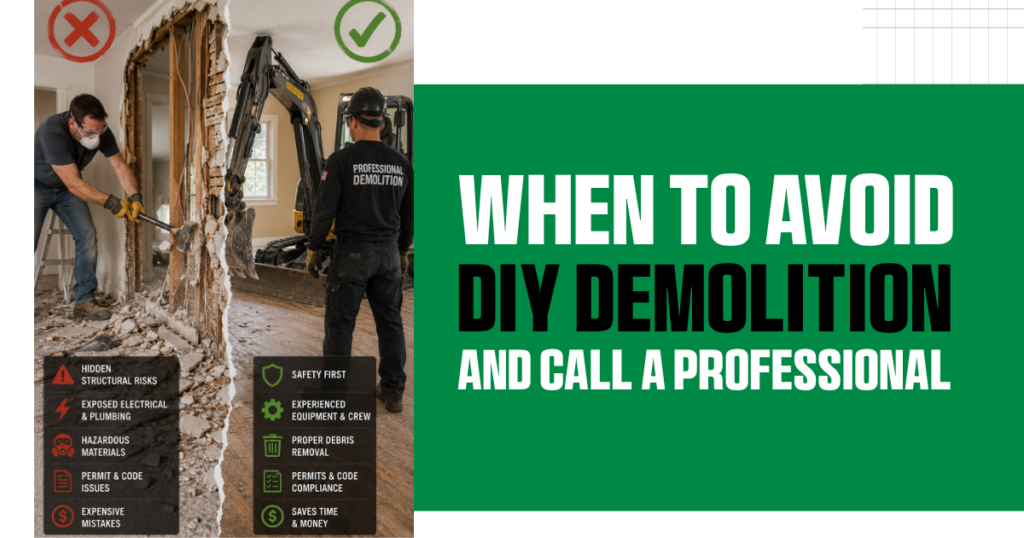
DIY demolition may be reasonable for small cosmetic tasks, such as removing non-structural trim, loose shelving, or simple fixtures after utilities are confirmed safe. But you should avoid DIY demolition when the project involves structural walls, roofing, large flooring removal, full room gut-outs, garages, sheds, decks, concrete, fire damage, water damage, mold, asbestos concerns, lead paint concerns, or unknown utilities.
You should also call a professional if you are unsure what a wall supports, do not know what permits are required, or do not have a safe debris removal plan. Uncertainty is a warning sign. In demolition, guessing can be dangerous.
Professional demolition and hauling teams are trained to look for risks before they become problems. They understand how to remove materials in a safe order, manage debris, protect the surrounding property, and keep the project moving. That experience is especially valuable for contractors, property managers, homeowners, and municipalities handling larger or time-sensitive jobs.
Safer Home Demolition Starts With the Right Team
The hidden dangers of DIY demolition are easy to miss until something goes wrong. What starts as a simple wall removal or cleanout can uncover structural problems, live utilities, hazardous materials, permit issues, and more debris than expected. That is why planning matters before the first swing of a hammer.
If you are preparing for home demolition, a renovation cleanout, or a larger demo project in New Jersey, take time to confirm the scope of work, check local permit requirements, and make sure you have a safe debris removal plan in place. Even when you handle part of the work yourself, having the right dumpster rental or hauling support can help keep the site cleaner, safer, and easier to manage.
Before you take on a risky DIY demolition project, make sure you know what needs to be removed, what materials may require special handling, and where the debris will go. For projects that create heavy construction waste, schedule a reliable dumpster rental service before work begins so cleanup does not slow down the job.