Key Takeaway: If you are wondering what items are not allowed in New Jersey dumpsters, rental companies typically restrict the biggest concerns like hazardous chemicals, certain paints, batteries, electronics, asbestos-containing materials, fuels, oils, and waste that requires special handling. New Jersey regulates several of these materials separately from ordinary construction debris and household junk. Always inform your dumpster rental provider what you plan to throw away before loading the container.
Renting a dumpster can make a home cleanout, renovation, roofing project, or construction job much easier. You can load debris as you work and have the entire container hauled away when the project is finished. However, a roll-off dumpster is not designed for every type of waste. Some materials can create fires, chemical reactions, environmental contamination, or transportation hazards. Others are covered by New Jersey recycling or waste-management requirements and need to go to an approved facility instead of being mixed with ordinary debris.
Understanding the rules before your dumpster arrives can help you avoid rejected loads, extra charges, cleanup problems, and project delays.
What Items Not Allowed in NJ Dumpsters Rental Customers Should Know About
The exact list of prohibited materials can vary depending on the dumpster company, transfer station, landfill, municipality, and type of container you rent. However, hazardous and specially regulated materials are the most common restrictions.
The U.S. Environmental Protection Agency identifies products such as paints, cleaners, oils, batteries, and pesticides as common examples of household hazardous waste when they contain hazardous ingredients. These materials may be toxic, corrosive, flammable, or reactive and require special care during disposal.
New Jersey also manages several materials through its recycling and universal waste regulations. These include certain batteries, pesticides, mercury-containing devices, lamps, consumer electronics, used oil, antifreeze, latex paints, and oil-based finishes.
That does not mean every item in these categories is handled exactly the same way. It does mean you should never assume it belongs in a standard roll-off container.
Hazardous Waste Dumpster Rental Restrictions in New Jersey
A standard dumpster rental is generally intended for ordinary solid waste or approved construction and demolition debris. A hazardous waste dumpster rental requires a different level of handling because hazardous materials cannot simply be mixed into a typical roll-off load.
Products such as gasoline, solvents, pesticides, certain automotive fluids, chemical cleaners, and other flammable or toxic liquids may present risks during loading, transportation, and disposal. Even containers that appear empty can retain hazardous residue, which is why the EPA recommends handling leftover hazardous products carefully and following local disposal instructions.
If you find unidentified chemicals while cleaning a garage, basement, commercial property, or workshop, do not pour them out or hide them under other debris. Keep the material in its original labeled container whenever possible and contact the appropriate local household hazardous waste program or disposal facility.
For contractors, commercial properties, and businesses, disposal requirements may be different from residential household hazardous waste rules. Confirm the waste type before scheduling removal.
Paint, Solvents, Oils, and Other Liquids
Liquid waste is one of the most important categories to discuss with your dumpster rental provider before loading.
Oil-based paint and similar finishes can contain hazardous ingredients. New Jersey includes oil-based finishes within its universal waste management system, while latex paint is generally treated differently and may be managed as a Class D recyclable material under applicable requirements.
This distinction matters because a half-full can of liquid paint is not the same as a completely dried container or dried paint residue. Acceptance can also depend on the disposal facility receiving the dumpster.
Motor oil, gasoline, fuel, solvents, antifreeze, and similar fluids should also be separated from ordinary dumpster debris unless your rental provider has specifically approved them.
When in doubt, disclose the material before you load it. A quick question before your project starts is much easier than dealing with a rejected dumpster later.
Batteries and Electronics Are Common Prohibited Items in Roll Off Dumpster Rentals
Batteries and electronics are another major group of prohibited items roll off dumpster customers should separate from general debris.
New Jersey’s universal waste rules cover several types of batteries, and NJDEP guidance recommends recycling rechargeable batteries rather than placing them with ordinary waste. Rechargeable battery types can include lithium-ion, nickel-cadmium, nickel-metal hydride, nickel-zinc, and certain small sealed lead batteries.
Lithium-ion batteries deserve particular attention because damaged or improperly handled batteries can create a fire risk during collection and waste processing.
Electronics also require separate consideration. New Jersey defines consumer electronics broadly as home or business devices containing circuitry. Examples can include computers, printers, televisions, stereos, telecommunications equipment, and related devices. NJDEP manages consumer electronics through its universal waste framework so they can be directed to appropriate handlers or recycling facilities.
Before throwing a television, computer monitor, laptop, rechargeable tool battery, or similar device into a dumpster, ask your provider where it should go instead.
Can You Put Asbestos in a Dumpster in New Jersey?
Asbestos-containing material should never be treated like ordinary demolition debris without first determining exactly what material you are dealing with.
New Jersey has specific requirements for managing and disposing of asbestos-containing waste. The rules can differ based on the type of material, asbestos concentration, whether the material is friable, the type of building involved, and how the material is removed. Certain asbestos-containing waste must be managed as designated asbestos waste and transported to an appropriate permitted facility.
This is especially important during renovations and demolition projects involving older structures.
Materials such as insulation, flooring, roofing products, pipe coverings, siding, or other older building components may require testing or professional evaluation before demolition begins. Do not break apart suspected asbestos material and place it into a regular dumpster simply because it looks like ordinary construction debris.
If asbestos is suspected, determine the proper removal and disposal process before continuing the project.
Appliances, Tires, and Other Items May Need Prior Approval
Not every restricted dumpster item is classified as hazardous waste.
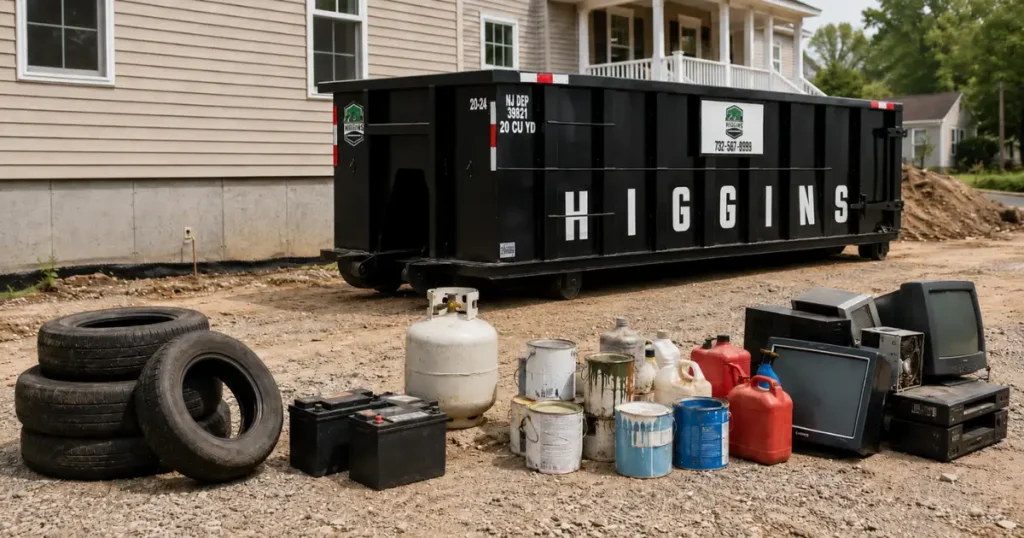
Large appliances, tires, mattresses, refrigerators, air-conditioning equipment, propane tanks, and other specialty items may be restricted by the dumpster company or receiving disposal facility. Some require separate recycling, additional processing, or special fees.
Refrigerators and air conditioners are particularly important to discuss because they can contain refrigerants that must be managed appropriately before disposal. Propane cylinders and other pressurized containers can also create serious hazards if they are crushed, punctured, or exposed to heat.
Tires are another example of material that may require separate handling. New Jersey classifies scrap tires within its Class B recyclable material category rather than treating them exactly like ordinary household trash.
The safest approach is simple: if an item contains fuel, refrigerant, chemicals, compressed gas, batteries, or another potentially hazardous component, ask before putting it into your roll-off container.
Why Prohibited Items Roll Off Dumpster Rules Matter
Restrictions are not there simply to make dumpster rentals more complicated. They protect workers, equipment, roads, disposal facilities, and the environment.
Imagine a container filled with renovation debris that also contains a leaking gasoline can. The liquid can spread throughout the dumpster and contaminate other materials. A damaged lithium battery can create a fire hazard. An unknown chemical can react with another product during transportation. Improperly handled asbestos can expose workers and surrounding areas to hazardous fibers.
Waste facilities also process different materials in different ways. A load intended for normal construction and demolition disposal may not be permitted to contain materials that require specialized recycling or hazardous waste management.
If prohibited material is discovered, the dumpster may be rejected, additional disposal charges may apply, or the material may need to be removed before transportation.
That is why describing your project accurately when you book your dumpster is important.
What Should You Do With Items That Cannot Go in a Dumpster?
Start by identifying what you have instead of assuming everything from your project belongs in one container.
For household chemicals, oils, pesticides, batteries, and similar materials, your county or municipality may provide household hazardous waste collection programs or designated drop-off locations. The EPA recommends contacting local environmental, health, or solid waste agencies for available household hazardous waste programs.
Electronics and rechargeable batteries may have separate recycling options. Asbestos and regulated construction materials require disposal procedures appropriate to the specific material.
Most importantly, do not try to conceal prohibited waste beneath furniture, construction debris, roofing material, or household junk. Tell your dumpster provider exactly what you are removing.
Doing so allows the company to determine whether the material can go into the dumpster, requires a different container, carries an additional disposal charge, or needs to be taken somewhere else entirely.
Ask Before Loading Your New Jersey Dumpster
Knowing what items are not allowed in dumpster NJ rentals can save you time, money, and unnecessary problems during your project. Hazardous chemicals, fuels, certain paints, rechargeable batteries, electronics, regulated asbestos waste, pressurized containers, and other specialty materials often require disposal methods outside a standard roll-off dumpster.
At Higgins Hauling & Demolition, we provide reliable dumpster rental and demolition services throughout New Jersey. Whether you are cleaning out a property, renovating a home, replacing a roof, or managing a construction project, our team can help you choose the right dumpster for the debris you expect to generate.
Before loading anything you are unsure about, contact Higgins Hauling & Demolition and tell us what you need to dispose of. We can help you determine what belongs in your dumpster and what should be handled separately.